While the incidence of autism has risen precipitously in the last decade, one thing hasn’t changed much. It is still enormously expensive to provide ongoing education and therapy for autistic children. One proven treatment for autism is early and intense educational intervention. However, for many parents, that intervention is cost and/or distance prohibitive. In some areas, there are few or no options for after-school care or babysitting.
The increased incidence of autism paired with an ongoing dearth of professional resources means that families often wait for weeks or months for an appointment and must travel to the nearest major medical center for care, sometimes over great distances. As they wait for meaningful care and instruction, the family faces a host of risks.
In the paper, we said:
The constant vigilance to protect one’s child, one’s family, and one’s partner as well as one’s self can leave parents irritable and on edge indefinitely. These symptoms may cause clinically significant problems in daily social and occupational functioning, both from the perspective of PTSD and other physical and mental/behavioral health perspectives(Read more.)
Showing posts with label Fatherhood. Show all posts
Showing posts with label Fatherhood. Show all posts
Friday, January 19, 2018
Technologies to Lessen the Distress of Autism
From Behavior Imaging:

Tuesday, January 16, 2018
Finding a Sitter
From Healthline:
The first place — and, arguably, the easiest — most special needs parents look to is within their own families and friend groups. Trust them? Absolutely! And they work cheap! But as grandparents age, or aunts and uncles move away, it can be difficult for parents to tap into that existing network. Additionally, you might get the sense (whether rightly or wrongly) that you are “imposing.” But, honestly, if you had abundant resources for your child care needs, you wouldn’t be reading this post anyway. (Read more.)
Monday, January 15, 2018
Early Diagnosis of Autism
From The Herald Sun:
Researcher Dr Megan Clark said sometimes parents and the medical community were hesitant to diagnose a child as being on the autism spectrum too early in life. “Currently in Australia, only 3 per cent of children are diagnosed as early as 24 months,” Ms Clark said. “We found, of the children diagnosed early, 73 per cent continued to meet the criteria for autism from toddlerhood through to school age, so it is possible to conclude that an early diagnosis is reliable and stable.”
The study found three-quarters of children who were detected early went to a mainstream primary school, compared with 57 per cent diagnosed later. “Often, one of the first questions around diagnosis is: ‘Will my child be able to attend a mainstream school?’ And our findings are encouraging for parents,” Dr Clark said. “Autism is a lifelong condition, but we know early intervention improves children’s ability to communicate and their cognition.” (Read more.)
Tuesday, January 9, 2018
Life After Special Ed
Are schools doing enough? From Disability Scoop:
Schools are legally obligated to create meaningful post-schooling plans for students with disabilities as part of their Individualized Education Programs, or IEPs. Under federal law, special education students must have transition plans in place by age 16 that include work, school and independent living goals that a student would like to achieve. Several states require schools to start this process at age 14. But Kate’s education failed to set her up for higher education or a career, as is often the case with special education students. Her experience after high school shows how important legally mandated transition plans and services are — and demonstrates how hard it is to do them right for all students. (Read more.)
Friday, December 29, 2017
Disciplining an Asperger's Child

From Advanced Psychology:
Trying to discipline your child can be a difficult and ever changing world of frustration for all involved. When your child has been diagnosed with Asperger’s Syndrome it can be as difficult to create rules and boundaries as it is to…(Read more.)
Thursday, December 28, 2017
Special Needs Homeschooling Myth Debunked
From the iHomeschool Network:
We have been homeschooling now for five years. We began before we had a single diagnosis for either of my boys, largely because school was a very difficult place for my oldest son. (Think sensory overload and bullying, mixed with a healthy dose of anxiety and you have an idea of what it was like for him every day – not good.)
A year after we began homeschooling, he was diagnosed with autism and generalized anxiety disorder. A year later, we learned his younger brother is profoundly dyslexic and has ADHD. In both instances, I was asked if, now that we had the diagnoses, I would be putting the boys back in school. There was an assumption that because my children now had identified “special needs”, we would need the “experts” to take over their education.
The truth is, although I was a little overwhelmed with all the needs, I also felt even more certain that a typical school environment would not accommodate my children’s learning differences. (Read more.)
Thursday, December 21, 2017
When Your ADHD Child is Upset
From the Child Development Institute:
Children with ADHD are more prone to meltdowns for a number of reasons. Often their brain circuitry for emotional regulation is dysfunctional in which it takes less to trigger an anger episode that lasts for a longer periods of time than other children. This is the result of faulty wiring. Working with them on relaxation techniques like taking deep breaths or counting to ten at the first sign of being upset can help. It is important for them to practice these when they are calm.
These kids often aren’t fully tuned in to what is going on around them and miss important information that causes them to misinterpret a situation and then react to what they think is going on rather than what really happened. If you are having a discussion with your child, pause frequently to make sure they are getting your point. Ask questions to make sure they understand and encourage them to ask you questions as well.
Some ADHD kids lack the ability to be flexible causing them to go into meltdown mode when there is a change in routine or an expected event does not happen. For instance a boy may be having a great time “rough housing” with his dad but does not want to stop when dad feels it has gone on long enough. This can become ugly and lead to fewer such play situations. Agreeing to use a timer and stop when the timer says to stop rather than dad might help avoid this. (Read more.)
Sunday, December 10, 2017
The Dangers of Wandering
From TC Palm:
It’s difficult, Naeder said, to pinpoint the exact reason children with autism wander away from their homes, schools and other safe places. Autism is a spectrum disorder, which means symptoms and behaviors can vary widely. But it’s worth examining potential causes so families can watch for triggers. “It could be a person with autism is seeking something,” Naeder said. Perhaps a special item or favorite location. “Or, as a result of their autism, they could be fleeing from something,” she explained. Maybe a loud noise or bright light.That also can make search-and-rescue missions challenging. Children with autism might run away from the sound of police vehicles or helicopters. If they are nonverbal, as Chelsea was, they might not be able to respond to someone calling their name.Though the causes of wandering are not clear, the prevalence of such behavior is documented. A 2012 study funded by Autism Speaks showed almost half of parents who have a child with autism said their child had tried to bolt from a safe, supervised place. Those were only the reported cases of wandering, so there’s a good chance the actual numbers are larger. “We’ve heard reports of parents sleeping in front of the door … it’s an incredible stressor on the entire family,” said Naeder, a social worker who has an adult brother with autism. The prevalence of autism in the U.S. means it's worth educating not just families who are directly affected, but our communities as a whole. One in 68 children are diagnosed with autism, according to the Centers for Disease Control; about 3.5 million Americans are living with the disorder. (Read more.)
Wednesday, December 6, 2017
Autism and Swimming
From Sensory Swim:
As the saying goes, “Showing up is half the battle”. This is true for work, for events & for swimming lessons. At Sensory Swim® we know that if a parent of an autistic child wants their child to learn how to swim, showing up is definitely half the battle. In some cases, especially for children who have an extreme fear of the water, this may be more like 80%. This skill of learning to swim may also save that child’s life one day. But let's not waste any more time pointing out the obvious. When it comes to supporting a child on the autism spectrum who is learning to swim, a parent must get that child to come to the lesson. We have come across parents who have signed their child up for swim lessons & cancelled without even showing up. They explain that they didn't show up because their six year old son refused to put on his bathing suit. And we didn't want to make him do something he didn't feel like doing. (Read more.)
Tuesday, December 5, 2017
December 2017 Newsletter
Our new Day Program is located at 2989 Dutton Mill Road, Aston, PA. It is the perfect location and a beautiful space for our participants. After waiting for its completion and meeting in parks, libraries and nature centers for several months,we are very excited and proud to be in our new program’s home. It features professional administrative offices, reception area and conference room. The ABA compliant facility has a computer lab, kitchen and ADL training area. A bright and spacious creativity area facilitates our Art, Music, Crafts and other group activities.
We now have two residences: one at 601 Vernon Street in Media, PA, and another at 1519 Black Rock Road in Swarthmore PA. They are beautiful, well-appointed homes in safe and welcoming communities. The Media home can house 3 residents with our wonderful house parent, RoseAnna Yap, who has a master's degree in special education from the Philippines, and the Swarthmore home is the residence of two adults and our newest houseparent, Dr. Rafe Martinez Arrue, with a PhD in psychology. The Franciscan Sisters have welcomed the participants of our Day Program to their Tuesday Afternoon Bingo. Every week our guys gleefully yell out their number or “bingo” and the regulars lovingly cheer them on.
Our Advent Season began with the generous gift of Christmas trees from Schmidt's Nursery and Linvilla Orchards. The Christmas trees were duly erected and decorated in Marty and Kevin’s home, the Day Program, and in our Media home. All of our men love Christmas, but Kevin goes crazy over Christmas trees. And the trees were particularly beautiful.
We are having an open house ribbon cutting ceremony on December 15th. We invite everyone to come and join us for beverages and snacks. And join us for our Wednesday Morning Coffee House from 10:00 to 11:00 beginning on December 13, with fresh coffee, donuts and pastries.
Sunday, December 3, 2017
Attention Problems
From Spectrum News:
Young children with autism are no more likely than those without the condition to sustain injuries that require medical attention, according a study of more than 2,000 children1. However, injuries are common among children with attention problems. About 30 percent of children with autism meet the criteria for attention deficit hyperactivity disorder (ADHD). “Attention problems do appear to contribute to injury risk,” says lead investigator Carolyn DiGuiseppi, professor of epidemiology and pediatrics at the Colorado School of Public Health. “That existing relationship may explain why some studies have found a higher risk of injury in children with autism.” Some studies have reported that children with autism are at increased risk of injury, perhaps because of their behavioral or motor problems2. But others have refuted that link3. (Read more.)
Saturday, December 2, 2017
Autism and Sleep
From Spectrum News:
Studies over the past few years suggest that sleep problems may stem from the same mutations that underlie other, more characteristic features of autism. These changes may disrupt the circadian clock, a molecular timer that keeps cells in sync with the night-day cycle. So far, no evidence ties any of the top autism genes to the circadian clock. But several genetic conditions associated with autism, including tuberous sclerosis, fragile X syndrome and Prader-Willi syndrome, may involve mutations that interfere with the clock. “This is a very active and needed area of investigation,” says Jonathan Lipton, a pediatric neurologist at the Boston Children’s Hospital Sleep Center. The circadian clock is a complex of proteins that forms every 24 hours in almost every cell in the body. It helps regulate the expression of genes, turning up to 40 percent of the genome on or off. (Read more.)
Thursday, November 30, 2017
Scenery Before Sleep
From Autism Works:
The way my head works and what helps me go to sleep is that I want to see a beautiful image of some sorts so I can keep that image in mind. It’s like seeing the City of Seattle and it's the last thing I want to see before shutting my eyes tight. I don’t do this every time I go to sleep, but sometimes, even today, if I have trouble sleeping I would want to see something gorgeous.
Sounds and music tunes help me sleep too. The realistic scenery is something I’d love to hold on to my eyes until I fall asleep. Ever had a scene you just want to keep for a long time? To me, I think that’s how great dreams come into play is the amazing thoughts we have during sleep. (Read more.)
Monday, November 27, 2017
Lacrosse Helps Teenager with Autism
From ABC Action News:
Grace Armenia isn’t like teenage girls her age. She isn’t worried about finding a boyfriend or getting her learners permit. But, she is searching for happiness and to be a part of something special.In July, Grace’s family says a coach for a local lacrosse team saw her out getting a lacrosse lesson and asked if Grace wanted to be the team’s goalie. Robert and Ericka Armenia thought it was a good idea and they’d give it a shot. “I knew she was tough and I knew she could handle that,” Robert Armenia said.
The family says the coach told them she might play as goalie sometime next year, depending on how well she did. Weeks later Grace was off the bench and in the game and faced with making her first big play, blocking a goal. (Read more.)
Sunday, November 26, 2017
Being a Parent With Autism
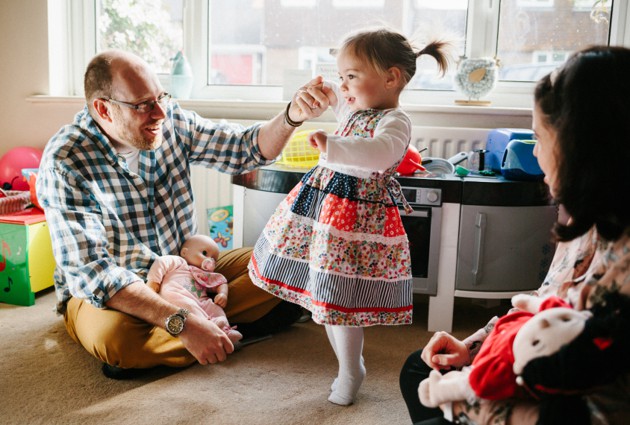
Hurley is not so far out of the ordinary as one might assume: A surprising number of people diagnosed with autism are raising children. An online survey recruited more than 300 mothers with autism, suggesting that there are probably thousands of parents diagnosed with autism worldwide, and perhaps hundreds of thousands or millions without a diagnosis. More evidence comes from Facebook groups, messaging platforms and blog comments, where parents compare notes and share problem-solving strategies.
Autism can pose challenges for parenting, their stories indicate. In addition to dealing with sensory overload, helping a child learn social skills can be difficult for people who struggle with social interactions themselves, for example. But autism can also provide valuable parenting skills, especially with a child who is also on the spectrum. (Read more.)
Subscribe to:
Posts (Atom)